
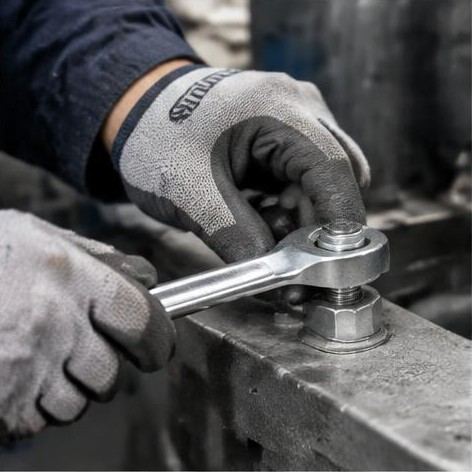
Ensuring Safety in Industrial Fastening Processes
Safety in fastening requires rigorous adherence to torque specifications and regular inspections to identify signs of fatigue.
Understanding the application
Isolate equipment and follow the approved work procedure before servicing a joint. Safe access, correct tools and supported components matter as much as fastener selection.
Selection & technical considerations
Use specified grades and calibrated equipment where required. Under-tightening, over-tightening and cross-threading can each compromise an assembly.
Practical checks before use
Reject damaged or unidentified parts and record deviations. Critical joints need a documented acceptance process rather than a visual assumption of security.
A complete enquiry includes
- Product type and reference standard or approved drawing
- Thread diameter, pitch, length and dimensional requirements
- Material, property class and specified surface finish
- Quantity, inspection documents and delivery destination
General information only. Follow product-specific engineering specifications and installation instructions. Photographs are illustrative, not an exact product or facility claim.
Back to insights